

Information & Tips
9 November 2026
How to Calculate Truck Shipping Costs
Truck shipping costs are influenced by more than just distance. The type of fleet, weight, cargo volume, and shipping method (LTL or FTL) also play a role.
For less-than-truckload (LTL) shipments, the cost is typically based on the weight and volume of the goods, which are converted into chargeable weight.
Meanwhile, for a full truckload (Full Truckload/FTL), the cost depends on the vehicle type and route as specified in the service provider’s quote.
What factors determine trucking costs?
Trucking service costs for shipping goods are generally calculated based on three factors, namely:
- Shipping distance. Calculated from the pickup location to the destination. The longer the route, the higher the cost.
- Vehicle type. Vehicle options—ranging from blind vans, CDEs, CDDs, Fusos, and trontons or wingboxes—clearly influence the cost calculation. Carefully consider these options based on the cargo’s dimensions, weight, and access conditions.
- Cargo weight and volume. For LTL shipments, the two factors mentioned above form the basis for cost calculation. In contrast, for FTL shipments, costs are calculated solely based on the vehicle type and route.
How do you calculate trucking costs?
Trucking costs are calculated based on CBM (cubic meters), or the volume of the goods in cubic meters.
CBM = length × width × height (in meters)
For example, a single carton measures 60 × 40 × 40 cm. After converting to meters, its volume is 0.6 × 0.4 × 0.4 = 0.096 CBM. If you’re shipping 10 cartons of the same size, the total is 0.96 CBM.
For palletized goods, measure all dimensions of the shipment, including the pallet and outer packaging.
Actual Weight vs. Volumetric Weight
For certain shipments, service providers use “chargeable weight,” which is the weight used to calculate the rate. This value is determined by comparing the actual weight and the volumetric weight.
Volumetric weight = CBM × conversion factor
The conversion factor depends on the mode of transport, service, and the carrier’s terms. Therefore, there is no single figure that automatically applies to all trucking services. For example, assuming 250 kg per CBM:
- Example 1, cartons: 10 cartons with a volume of 0.96 CBM have a volumetric weight of 240 kg. If the actual weight is 100 kg, the calculation is based on 240 kg, provided the service terms use the higher value
- Example 2, pallets: one pallet measuring 1.2 × 1 × 1.2 meters has a volume of 1.44 CBM and a volumetric weight of 360 kg. If the actual weight is 250 kg, the chargeable weight becomes 360 kg
The calculations above are merely examples, not universal rate rules. For FTL shipments, costs may also depend on fleet capacity and route, not just the chargeable weight.
How can you reduce shipping costs?
There are several steps you can take to save on shipping costs. Here are some of them:
- Optimize packaging. Use precisely sized cardboard boxes to avoid excess empty space, as empty space adds to the calculated volume
- Consider consolidating shipments. For LTL shipments, combining loads can be helpful when the cargo does not yet fill a full truck’s capacity
- Choose the right vehicle for the load. Avoid using vehicles that are too large for small loads—or vice versa
- Plan schedules and routes. Coordinate loading and unloading to make shipments more efficient and reduce wait times
- Check for additional costs. Additional costs such as tolls, waiting or overnight fees, insurance, and applicable site access fees. Ensure all of these are listed in the quotation.
SELOG Trucking Services
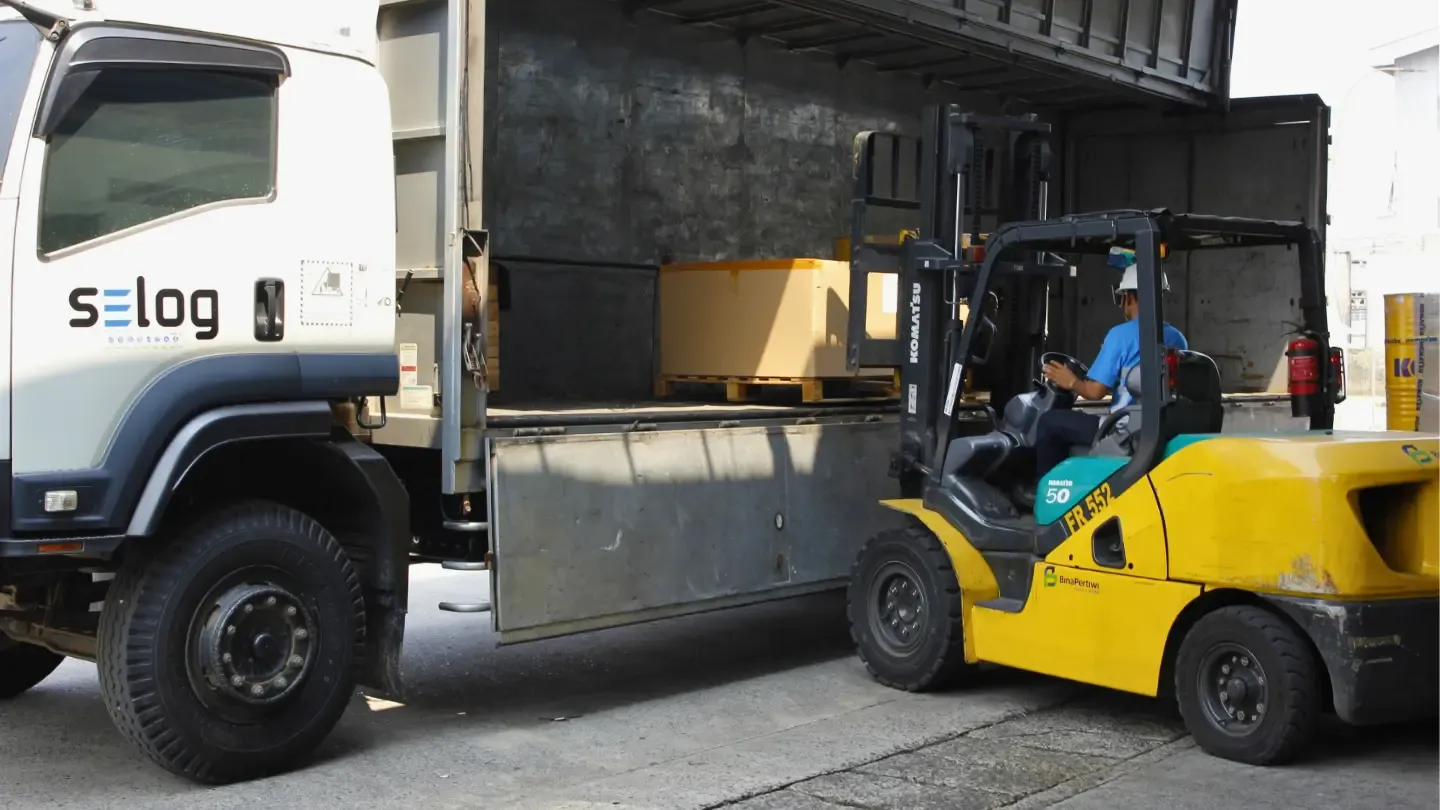
SELOG offers trucking services to support freight transportation needs with a fleet selection that can be tailored to shipment characteristics, including wingbox trucks.
The logistics business unit of PT Serasi Autoraya (SERA)—which is also part of the Astra Group—has over 20 years of experience providing a comprehensive range of logistics services.
SELOG offers key trucking services that can serve as shipping solutions to various locations. These include:
- Last Mile Delivery for deliveries directly to customers
- Long Haul for inter-city and inter-island distribution
- Less Than Truckload (LTL) for small-volume shipments
SELOG’s truck fleet is comprehensive, ranging from Blind Vans, CDE Trucks, CDD Long Trucks, to Wingbox Trucks. It is also supported by the digital technology Astra Fleet Management Solution (AstraFMS) to monitor fleet mobility in real time.
In addition to trucking, SELOG also provides a variety of other logistics services, including shipping, freight forwarding, warehousing, and project cargo.
For more information about SELOG’s services, visit the website www.selog.astra.co.id or call (021) 26605333. Also, follow SELOG’s official social media accounts.
- Instagram: @selog_astra
- LinkedIn: SELOG
FAQs about truck shipping costs
What’s the difference between LTL and FTL?
LTL is for partial loads that share truck space, while FTL involves chartering an entire truck.
What is chargeable weight?
The weight used to calculate the rate, determined by comparing the actual weight and the volumetric weight.
What is the volumetric weight conversion factor for trucking?
There is no single fixed number. The factor varies by service provider, so be sure to ask directly when requesting a quote.
When should you choose LTL?
When your shipment doesn’t fill an entire truck, making it more cost-effective to share space through consolidation. The exact threshold depends on the type of goods, the route, and the quotes you receive.
What costs are often overlooked?
Tolls, loading and unloading fees, waiting or overnight fees, insurance, and site access fees.

Information & Tips
News
16 Oktober 2026
Advantages of Wingbox Trucks Over Other Types of Trucks for Goods Delivery
News
7 Oktober 2026
Types of Logistics Transportation for Goods Distribution and Their Advantages

News
2 Oktober 2026
SELOG Wins Domestic Investment Award at the 2026 Jakarta Investment Award

News
15 April 2025
SELOG Receives 3 Innovation Awards from TAM

News
15 April 2025
Becoming Halal Certified, SELOG Strengthens Its Halal Products Distribution in Indonesia

Information & Tips
News
7 Februari 2025
SELOG Achieves SMK PAU Certification
Make sure you have the latest SELOG and Logistics information updates
Please enter your email to get the latest news or articles from us.